Volatility (1s) Indices on Deriv: What “1s” Means, Real Speed Data and Which One to Choose
All Volatility Indices Listed on 20 October 2026
| Standard (2-second ticks) | (1s) version |
|---|---|
| Volatility 10 | Volatility 10 (1s), 15 (1s) |
| Volatility 25 | Volatility 25 (1s), 30 (1s) |
| Volatility 50 | Volatility 50 (1s) |
| Volatility 75 | Volatility 75 (1s), 90 (1s) |
| Volatility 100 | Volatility 100 (1s) |
What Changes and What Does Not
| Standard | (1s) | |
|---|---|---|
| New price | every 2 seconds | every second |
| A 5-tick contract lasts | about 10 seconds | about 5 seconds |
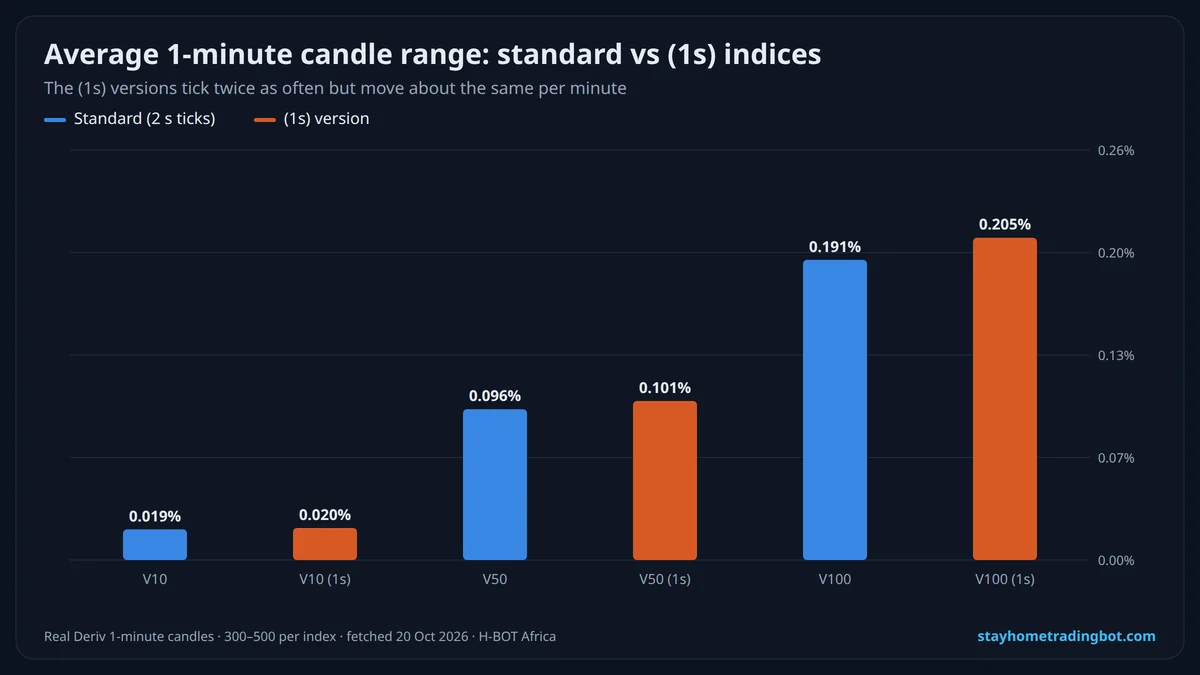
| Movement per minute | set by the volatility number | about the same |
| 5-tick Rise payout (V50, $10) | $19.53 | $19.53 |
| Open | 24/7 | 24/7 |
Because the payout is the same, the house edge per trade is the same. A (1s) bot simply places trades faster, so it reaches its wins and its losses faster.
Which One Should You Use?
- Manual chart trading: either; use the one your strategy was tested on.
- Tick and digit contracts: (1s) gives more trades per hour, so set a trade limit.
- Bots: a bot on V100 (1s) can place hundreds of trades an hour. Always set a stop loss in the bot settings ({L("deriv-bot-settings", "see bot settings")}).
- Never mix data from a standard index and its (1s) version in one analysis: they are separate price series.
Try It Free on a $10,000 Demo
Open a free Deriv account, connect it to H-BOT Africa and test bots, signals and digit tools on virtual money before risking a shilling.
Open a free Deriv account Open Deriv Bot Open H-BOT Ask on WhatsApp
Have an audience? Become a Deriv partner and earn commission on clients you refer.
Disclosure: some links on this page are Deriv partner links. If you open an account or become a partner through them, H-BOT Africa may earn a commission at no extra cost to you.
Frequently Asked Questions
What does 1s mean in Volatility 100 (1s)?
The index produces a new price every second instead of every two seconds.
Is Volatility 100 (1s) more volatile than Volatility 100?
Per minute they move about the same; the (1s) version just ticks twice as often.
Which 1s indices does Deriv offer?
On 20 October 2026: Volatility 10, 15, 25, 30, 50, 75, 90 and 100 (1s).
Do 1s indices pay more?
No. A 5-tick Rise paid the same $19.53 on V50 and V50 (1s).
Are 1s indices better for bots?
They let a bot trade faster, which also makes losses come faster. Use limits.
Can I trade digits on 1s indices?
Yes, digits were listed for the (1s) indices we checked.
Related Guides
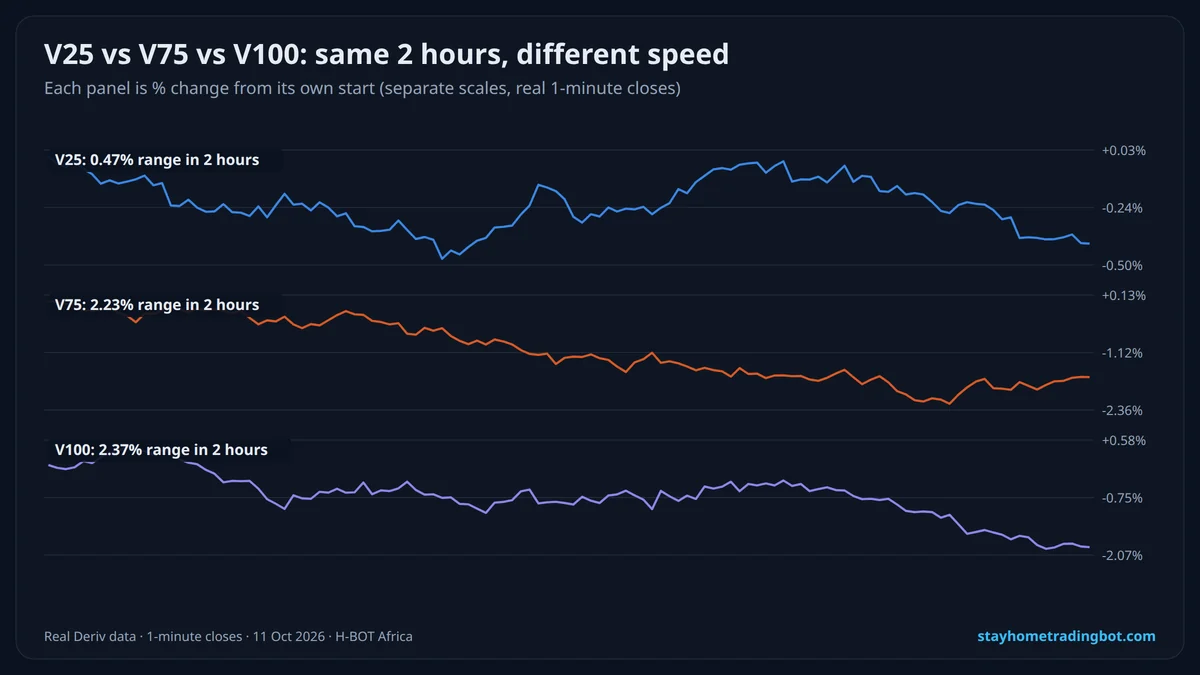 Volatility 100 Index: What It Is, V100 vs V100 (1s) vs V50, and How to Trade ItVolatility 75 Index (V75): What It Is, How It Works and How to Trade It
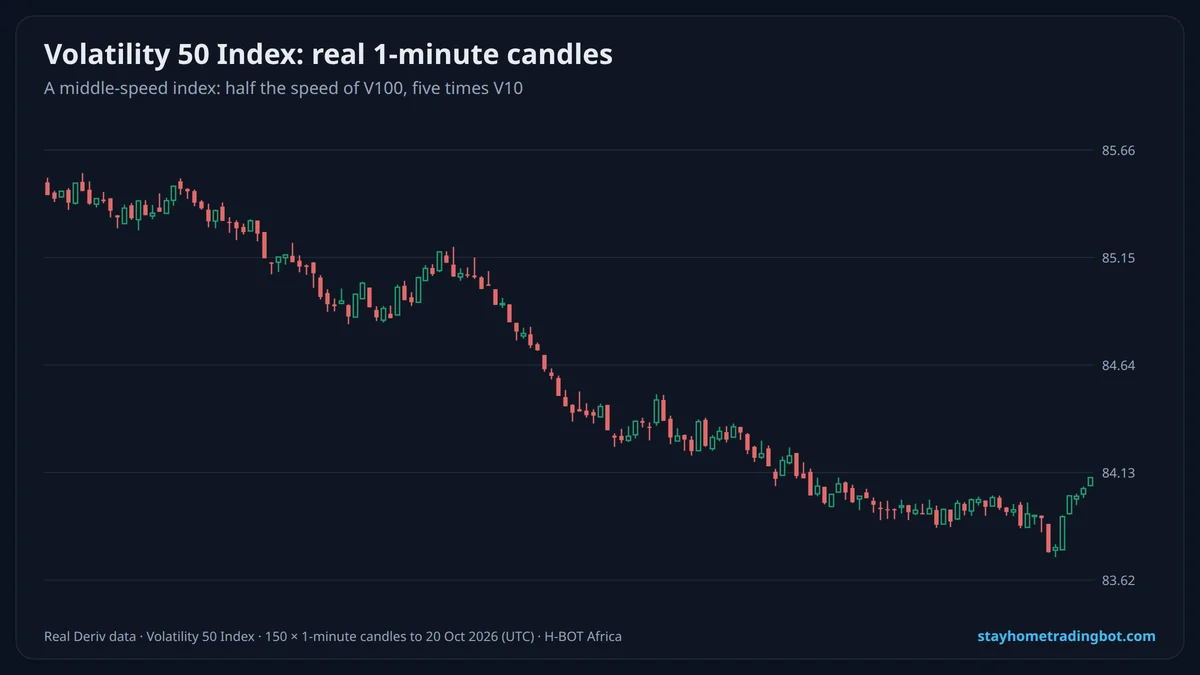 NEWVolatility 50 Index: How It Moves, Which Contracts You Can Trade and How to Trade It Safely
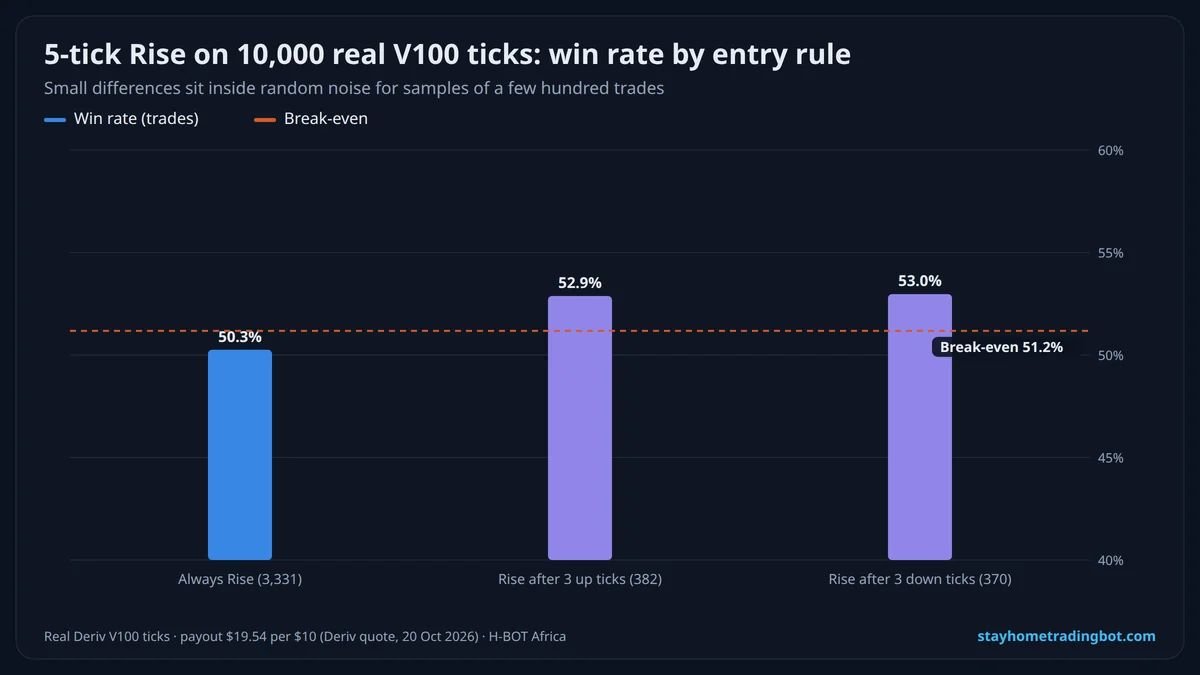 NEWDeriv Tick Trading Strategy: What 10,000 Real Volatility 100 Ticks Showed About Short Trades