Trading Compounding Plan: A 30-Day Table, the Honest Maths and How to Build a Realistic Plan
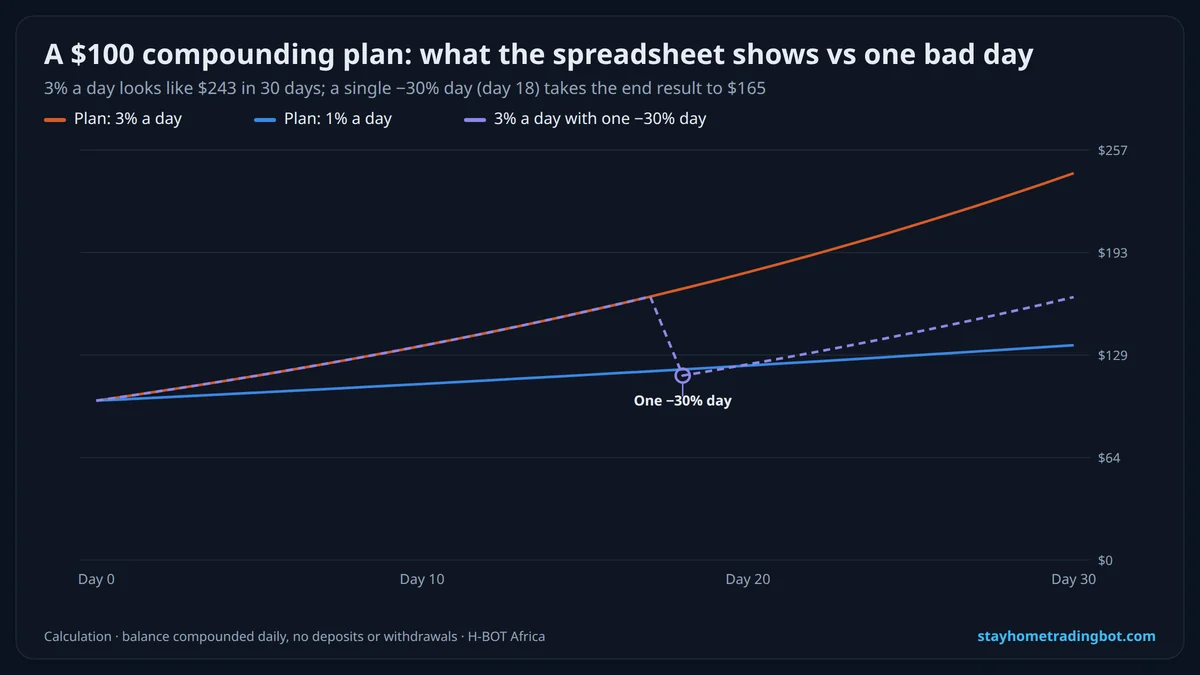
30-Day Compounding Table
| Daily growth | $10 after 30 days | $50 after 30 days | $100 after 30 days |
|---|---|---|---|
| 1% | $13.48 | $67.39 | $134.78 |
| 2% | $18.11 | $90.57 | $181.14 |
| 3% | $24.27 | $121.36 | $242.73 |
| 5% | $43.22 | $216.10 | $432.19 |
| 10% | $174.49 | $872.47 | $1,744.94 |
These numbers assume no losing days at all, which never happens. Many "30-day challenge" posts show the 10% row; treat that as a warning sign.
Why One Bad Day Matters So Much
| Loss on one day | Gain needed to get back |
|---|---|
| −10% | +11% |
| −25% | +33% |
| −50% | +100% |
| −80% | +400% |
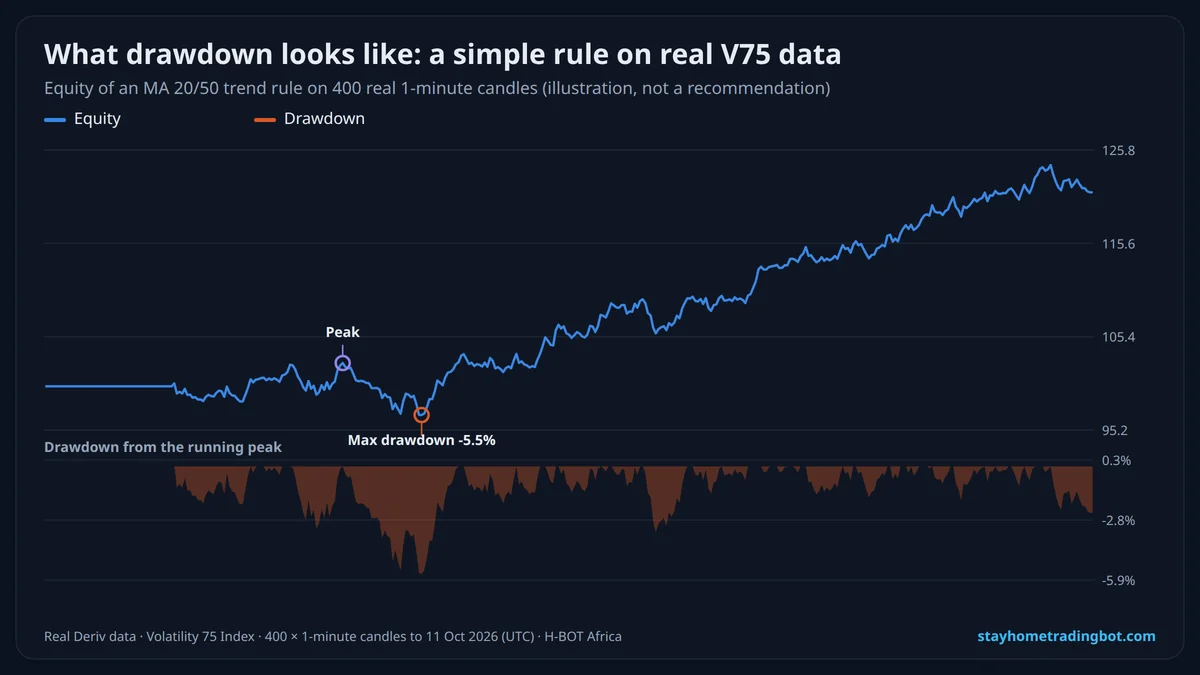
Big losses need much bigger gains to recover. That is why the plan must limit losses before it targets gains (see max drawdown).
A Realistic Compounding Plan
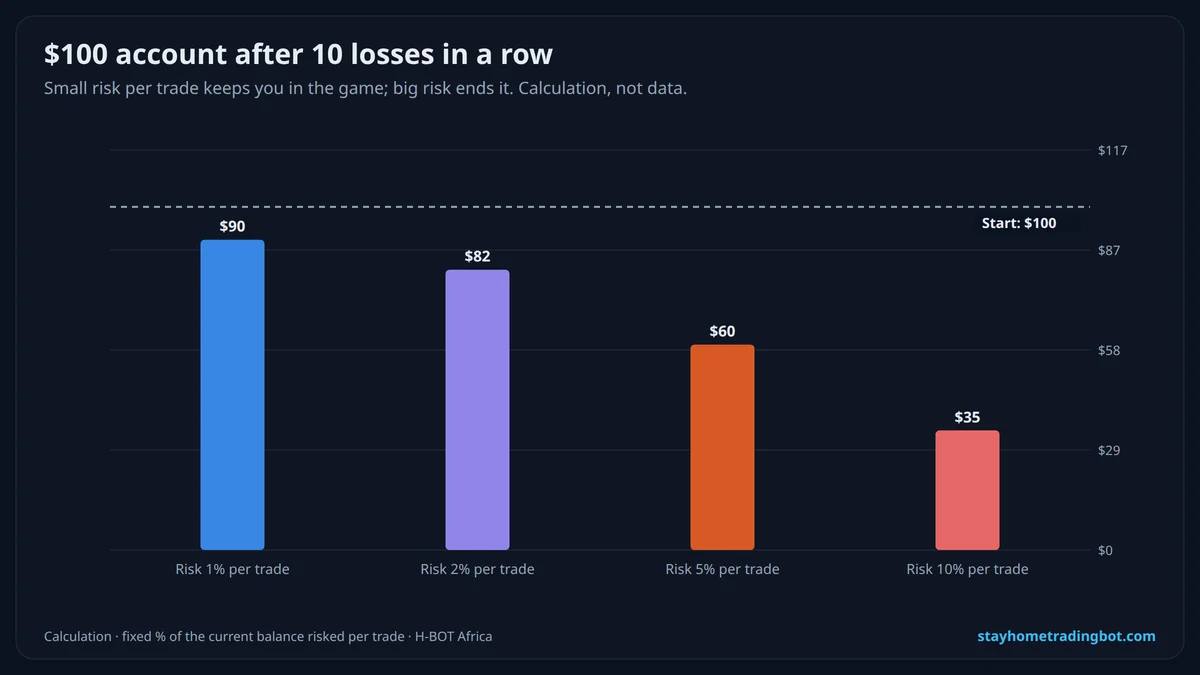
- Risk 1–2% of the current balance per trade.
- Daily loss limit: stop after −3% to −5% on the day.
- Daily profit target is optional; stopping after a good day protects gains.
- Recalculate stake size weekly, not after every trade.
- Withdraw part of profits monthly (see {L("trading-profits-to-business", "trading profits to business")}).
- Track everything in a journal (see {L("backtester-and-journal-explained", "backtester and journal")}).
Try It Free on a $10,000 Demo
Open a free Deriv account, connect it to H-BOT Africa and test bots, signals and digit tools on virtual money before risking a shilling.
Open a free Deriv account Open Deriv Bot Open H-BOT Ask on WhatsApp
Have an audience? Become a Deriv partner and earn commission on clients you refer.
Disclosure: some links on this page are Deriv partner links. If you open an account or become a partner through them, H-BOT Africa may earn a commission at no extra cost to you.
Frequently Asked Questions
What is a compounding plan in trading?
A plan where each day’s target or stake is a percentage of the current balance, so growth builds on growth.
How much will $100 grow at 3% a day for 30 days?
About $243 on paper, if there are no losing days.
Is a 30-day compounding challenge realistic?
Not without losing days; one big loss can undo weeks of gains.
What daily target is realistic?
Most disciplined traders focus on risk per trade and monthly results, not a fixed daily percentage.
How do I compound a $10 account?
Use tiny stakes (1–2%), a daily loss limit, and expect slow, uneven growth.
Is compounding the same as martingale?
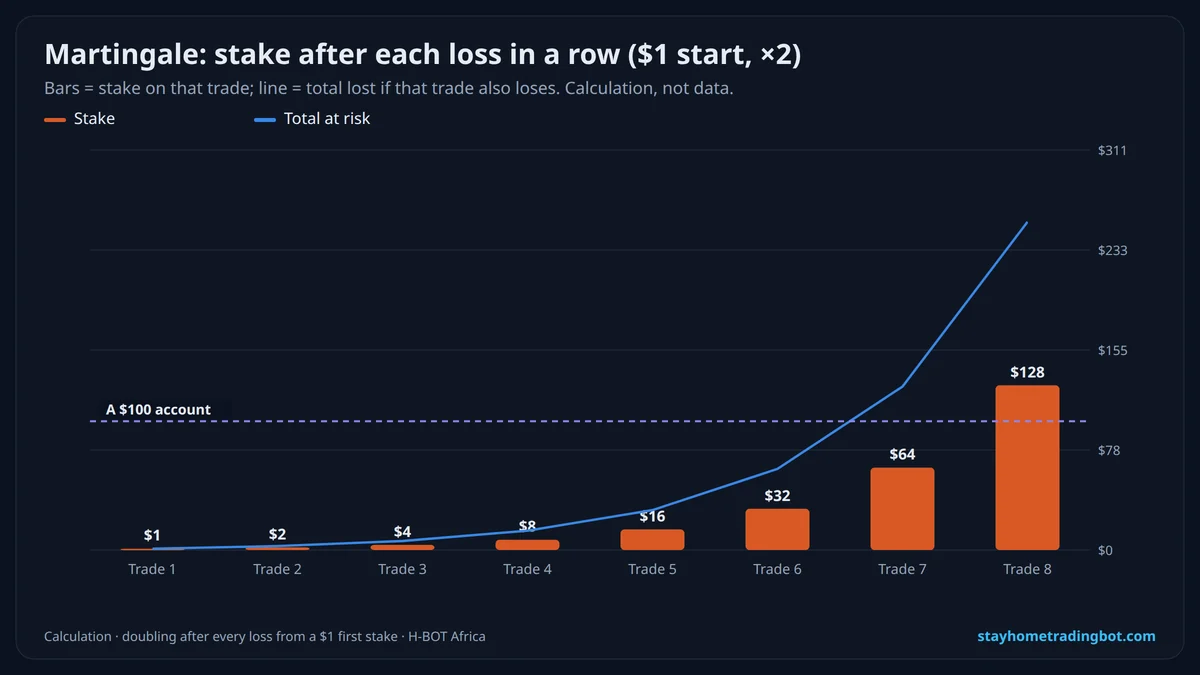
No. Compounding raises size as the balance grows; martingale raises size after losses.
Related Guides
 How to Grow a Small Trading Account Without Blowing It: An Honest Plan
 Max Drawdown in Trading: What It Means, How to Calculate It and What Is Acceptable
 Risk Management for Deriv Traders: Stake Size, Stop-Loss and Daily Limits That Protect Your Account
 Martingale Strategy on Deriv: How It Works, the Real Risk and Safer Settings