Deriv Touch/No Touch: How Barriers Work and How to Choose Them
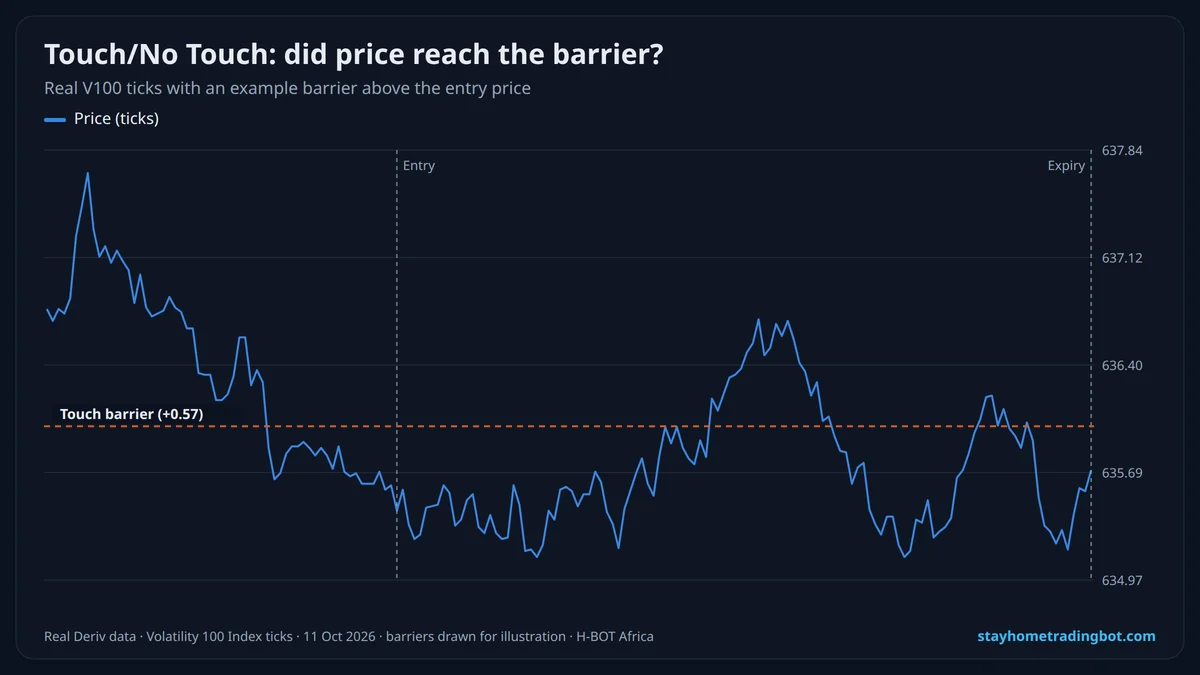
How Touch/No Touch Works
- Choose a market and duration (ticks, minutes, hours).
- Set a barrier above or below the current spot (the offset).
- Touch: wins as soon as any tick reaches the barrier before expiry.
- No Touch: wins if no tick reaches the barrier until expiry.
Barrier Distance vs Payout
| Barrier | Touch | No Touch |
|---|---|---|
| Close to spot | Likely, small payout | Unlikely, big payout |
| Far from spot | Unlikely, big payout | Likely, small payout |
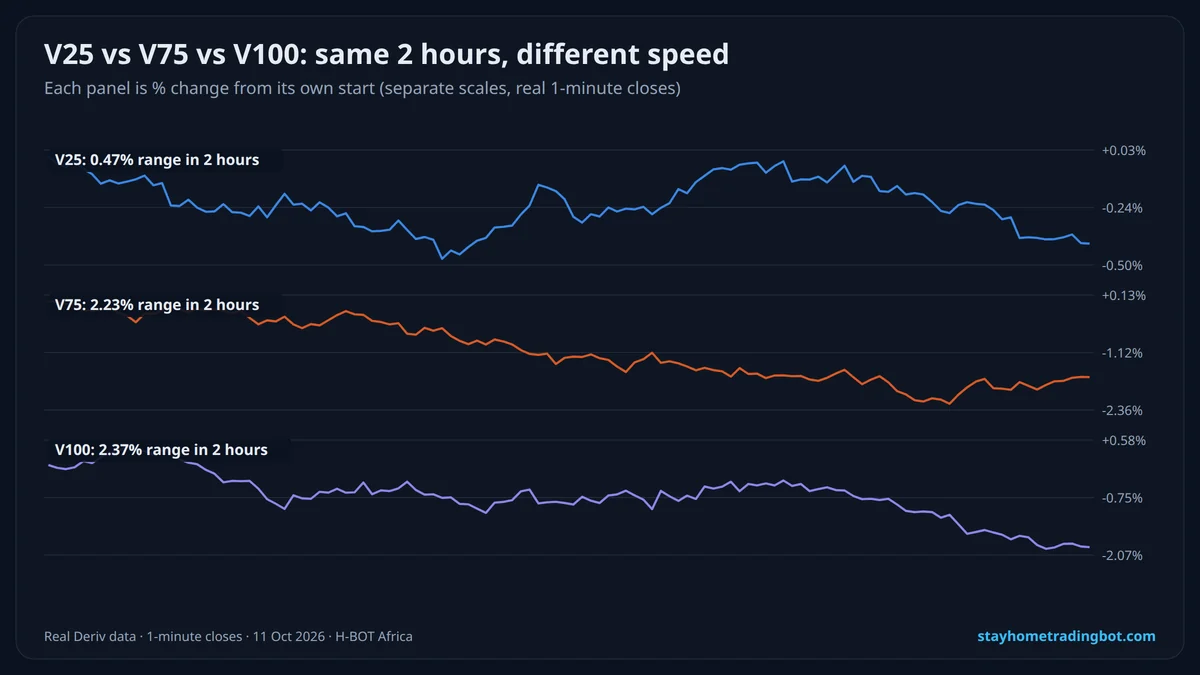
Volatility matters: on a fast index such as V75 or V100, price travels further in the same time, so a "far" barrier is closer than it looks.
Strategy Ideas to Test on Demo
- No Touch on a calm index (for example Volatility 10) with a moderate barrier.
- Touch after a breakout on a higher timeframe, when price is trending toward the barrier.
- Keep the stake fixed and record win rate and average payout; the payout tells you the break-even win rate.
Break-Even Win Rate
If a win returns 50% of your stake, you must win at least 2 out of 3 trades just to break even. Calculate this before every new setting.
A Demo Practice Plan (One Week)
- Day 1: for three barrier distances, write down the payout Deriv shows.
- Day 2: calculate the break-even win rate for each.
- Day 3–5: 30 demo trades per setting, fixed stake.
- Day 6–7: compare your real win rate with break-even; drop settings below it.
Common Mistakes
- Choosing "easy" barriers without checking the payout.
- Ignoring volatility differences between indices.
- Using martingale after losses.
Try It Free on a $10,000 Demo
Open a free Deriv account, connect it to H-BOT Africa and test bots, signals and digit tools on virtual money before risking a shilling.
Open a free Deriv account Open Deriv Bot Open H-BOT Ask on WhatsApp
Have an audience? Become a Deriv partner and earn commission on clients you refer.
Disclosure: some links on this page are Deriv partner links. If you open an account or become a partner through them, H-BOT Africa may earn a commission at no extra cost to you.
Frequently Asked Questions
What is Touch/No Touch on Deriv?
Contracts that win if the price touches (Touch) or never touches (No Touch) a barrier before expiry.
Is No Touch easier than Touch?
It depends on the barrier. A far barrier makes No Touch likely but the payout is small.
How do I choose a barrier?
Consider the index’s volatility and duration, and compare the payout with your realistic win rate.
Can Touch/No Touch be automated?
Yes, with Deriv Bot, but automation does not change the odds.
What is the best index for No Touch?
Calmer indices (Volatility 10 or 25) move less, but payouts are priced accordingly.
What is the break-even win rate?
Stake ÷ (stake + profit per win). For a 50% payout it is about 67%.
Related Guides
 Deriv Rise/Fall Strategy: How the Contract Works and How to Trade It Carefully
 Volatility 10 and Volatility 25 Index: How They Move and How to Trade ThemVolatility 75 Index (V75): What It Is, How It Works and How to Trade It
 Risk Management for Deriv Traders: Stake Size, Stop-Loss and Daily Limits That Protect Your Account